Guide
Sourdough vs. Brioche: Which Bread Fits Which Breakfast?
By the Bistro Cafe Miami Guide editors · Published · Updated
On this page
Bread is the part of a breakfast plate nobody orders on purpose, and it decides more than people think. Put avocado and a runny egg on soft bread and it falls apart before the third bite. Make French toast with a lean, chewy loaf and the custard never gets past the crust.
Sourdough and brioche sit at opposite ends of that problem. Here's how they differ, which breakfast dishes each one suits, and how bread shows up on Bistro Cafe's menu.
The Difference in One Table
| Sourdough | Brioche | |
|---|---|---|
| Type of dough | Lean: flour, water, salt | Enriched: flour plus eggs, butter, milk, often sugar |
| How it rises | Wild yeast and lactic acid bacteria in a starter | Usually commercial yeast |
| Flavor | Tangy, from lactic and acetic acid | Rich, buttery, slightly sweet |
| Crust and crumb | Thick crust, chewy open crumb | Thin golden crust, soft tight crumb |
| Holds wet toppings | Very well | Poorly unless thick-cut and toasted |
| Best breakfast use | Toast, savory sandwiches | French toast, egg sandwiches, buns |
Why Sourdough Tastes Sour
A sourdough starter is a mix of wild yeasts and lactic acid bacteria living in flour and water. The yeast makes the gas that lifts the dough. The bacteria make lactic acid and acetic acid, and those acids are the tang (Wordloaf).
Lactic acid tastes mild and yogurt-like. Acetic acid is sharper, closer to vinegar. Bakers push the balance with temperature and water: colder, stiffer doughs lean toward acetic and taste more sour, while warmer, wetter doughs stay milder (Chowhound). Researchers at the Technical University of Munich have identified lactic and acetic acid among the key flavor compounds in sourdough crumb (Analytica World).
For breakfast, that acid matters. It cuts through avocado, cheese and egg yolk the same way a squeeze of lime does.
Why Brioche Is Soft
Brioche is an enriched dough. King Arthur's professional brioche formula, for example, uses butter and eggs each at 50% of the flour weight, plus 12% sugar (King Arthur Baking). Historically there were cheaper and richer versions, with flour-to-butter ratios anywhere from 4:1 to 3:2 (Wikipedia).
All that fat coats the flour and keeps the gluten from getting tough, which is why brioche tears like cake instead of chewing like bread. It's also why brioche drinks up custard so well. The crumb is tight and absorbent, and the sugar in the dough browns fast on a griddle.
Which Bread for Which Dish
| Dish | Better bread | Why |
|---|---|---|
| Avocado toast | Sourdough | Holds wet toppings; acid balances the avocado |
| French toast | Brioche (thick-cut) | Soaks custard to the center, caramelizes outside |
| Croque madame | Either, but often brioche or pain de mie | Soft bread under béchamel and egg |
| Egg and cheese sandwich | Brioche bun | Soft bite, doesn't fight the egg |
| Smoked salmon toast | Sourdough | Tang works with salt and cream cheese |
| Grilled cheese | Sourdough | Crisps without going greasy |
None of this is a rule. Plenty of kitchens do avocado toast on multigrain or French toast on challah, which is another enriched bread close to brioche.
How Bread Shows Up on the Bistro Cafe Menu
The menu doesn't name the loaf for every plate, and bread supply can change, so if the bread matters to you, ask your server what's on that day. What the menu does show is where bread does the heavy lifting.
Croissants, more than a dozen of them. The Croissants & Waffles section is the biggest bread section on the menu: ham and cheese ($15), smoked salmon ($19), lamb ($18), prosciutto with manchego and eggs ($18), and a plain one ($7). Croissant dough is laminated, not enriched like brioche, so it's flaky rather than soft.
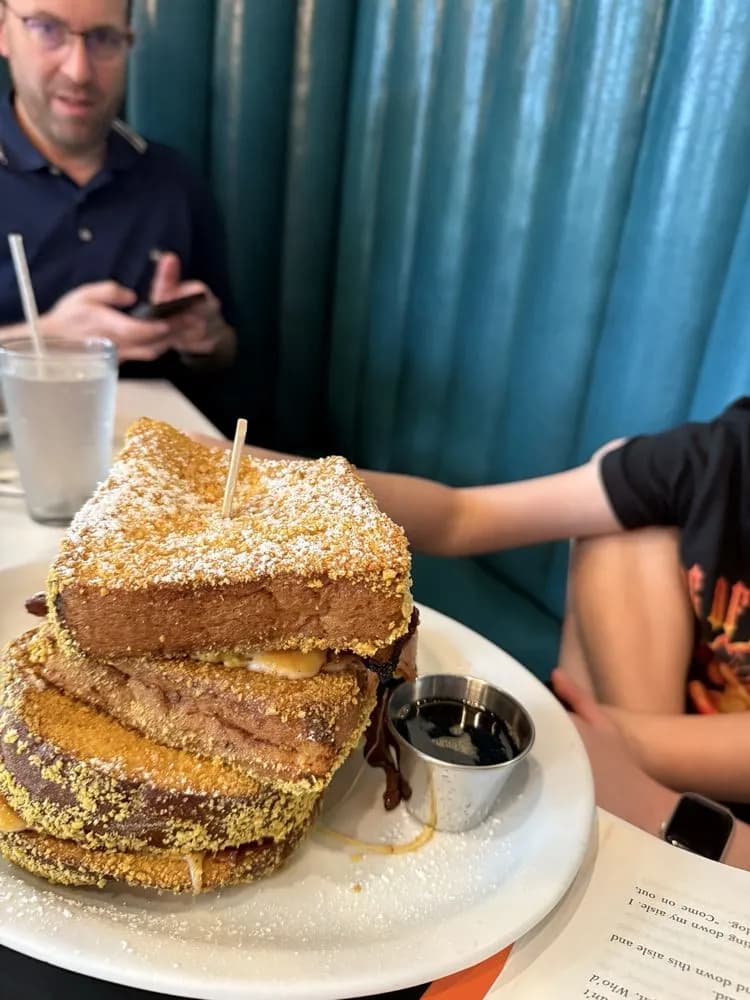
The French toast family. Classic French Toast ($23), Crazy French Toast ($24), Crème Brûlée French Toast ($26), and Romeo y Julieta ($26), which is French toast stuffed with bacon and cream cheese, finished with fruit and Nutella. This is the section where a rich, soft bread earns its place.
The "Madame" plates. Croque Madame ($26), Rey Madame ($27) and Doña Madame ($26) all borrow from the Paris café sandwich. The croque monsieur first showed up on a Paris café menu in 1910, and adding a fried egg on top turns it into a croque madame (Barry Popik). Bistro Cafe's versions skip the béchamel and build on French toast instead. Its Croque Madame is French toast stuffed with ham and mozzarella under two eggs, and the Rey Madame goes further: a French toast sandwich with ham, salami, bacon, cheddar, mozzarella and two sunny-side-up eggs.
Briochetta ($21). The one plate that names its bread: ham, bacon, eggs, potato and mozzarella on brioche.
Avocado toasts. Smoked salmon ($29), prosciutto ($28) and shrimp ($31). These are the plates where a sturdy toast matters most.
Full list and current prices are on the menu, with the sweet plates under Pancakes.
A Bakery Family, Before It Was a Cafe
Bread isn't an afterthought for the people who run this place. As a kid, owner Jan Karlo Ruiz helped in his father's bakery and pastry shop in Aguada, Puerto Rico, which the family had run for 34 years as of 2023. When he opened the first Bistro in Isla Verde in 2011, it was called Bistro Bakery, and he was the one in the kitchen (Miami Herald via AOL). The full timeline is in the Bistro Cafe history guide.
So Which One Wins?
Neither. Sourdough wins savory toast. Brioche wins French toast. If you're ordering for the table, get one of each and you've covered both.
If you're trying to figure out what else to order around the bread, the fusion brunch guide covers the Puerto Rican and Peruvian plates.
Frequently Asked Questions
Is sourdough healthier than brioche?
Brioche has far more fat and sugar because of the butter, eggs and sugar in the dough. Sourdough is a lean bread. If you're comparing calories, sourdough is usually lower per slice.
Can you make French toast with sourdough?
Yes, but it needs a longer soak because the crumb is chewier and the crust resists the custard. It comes out tangier and less cake-like.
Is challah the same as brioche?
No, but they're close. Both are enriched with eggs. Brioche uses butter and milk; traditional challah uses oil instead, so it can be dairy-free.
Does brioche have dairy?
Traditional brioche does, from butter and usually milk. Ask your server if you need to avoid dairy.
Come try the French toast yourself at 1352 NE 1st Ave, Downtown Miami. Call (786) 533-3876 for larger groups.
Sources
- Class Time: Sourdough Microbiology 101, Wordloaf
- What Exactly Gives Sourdough Bread Its Signature Flavor?, Chowhound
- Taste secret of sourdough bread decoded, Analytica World, August 31, 2023
- Brioche formula, King Arthur Baking
- Brioche, Wikipedia
- Croque Monsieur (Croque Madame), Barry Popik
- This Puerto Rican 'brunch all day' spot just opened in Coral Gables, Miami Herald (via AOL), May 8, 2023
- Bistro Cafe (Downtown) on Uber Eats (dish descriptions)
- Bistro Cafe Miami menu (prices)
Keep reading
Is Bistro Cafe Miami Worth It? Ratings, Prices and Who It Suits
Strong ratings, a long Puerto Rican brunch menu and brunch-restaurant prices. The evidence for and against a visit, and who it suits best.
Read More: Is Bistro Cafe Miami Worth It? Ratings, Prices and Who It Suits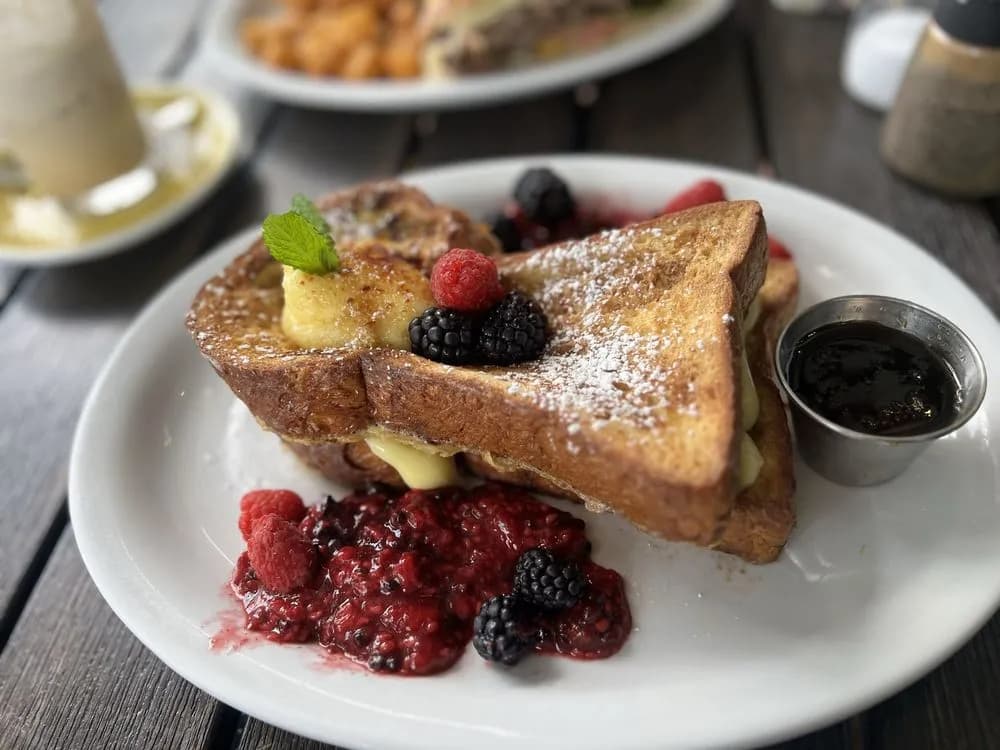
French Toast, Pancakes or Waffles? Bistro Cafe's Sweet Menu Compared
Four French toasts, five pancake stacks, four waffles and a row of savory versions. How they compare and what to order for the table.
Read More: French Toast, Pancakes or Waffles? Bistro Cafe's Sweet Menu Compared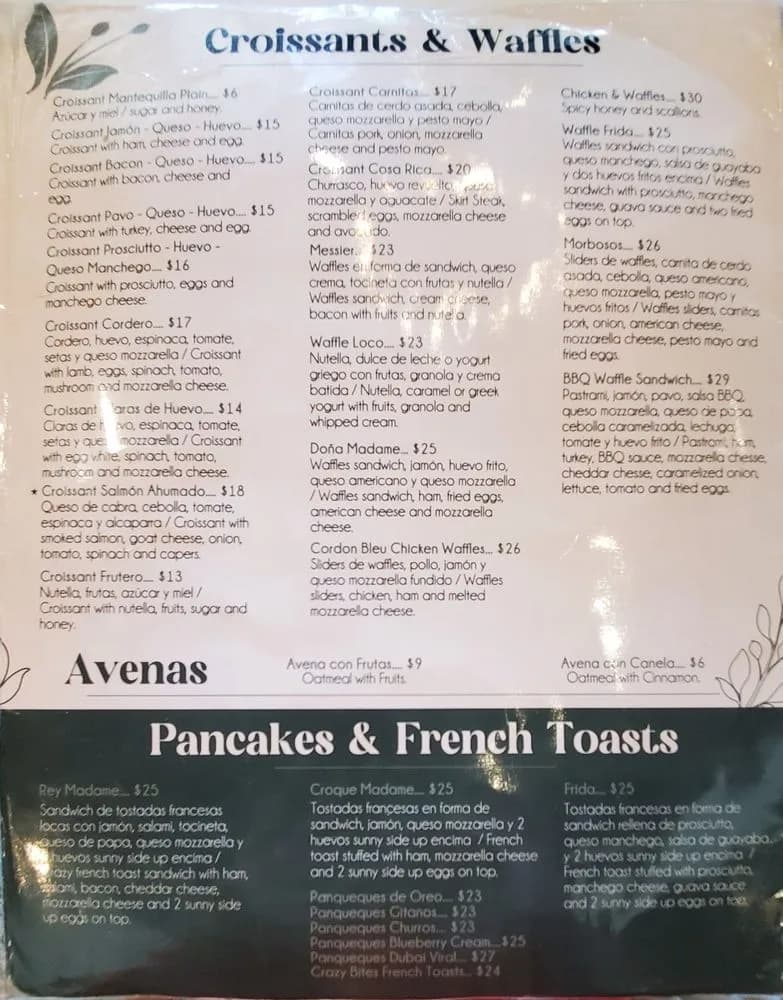
Bistro Cafe Miami Prices: What a Meal Really Costs
Most plates cost $21 to $29. Price ranges by section, sample bills with tax and tip, and the cheapest ways to eat well.
Read More: Bistro Cafe Miami Prices: What a Meal Really Costs